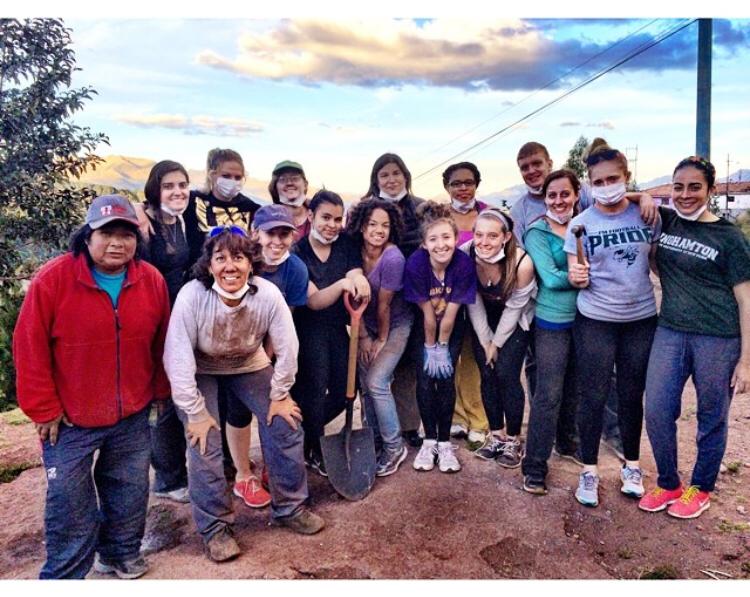
On top of being a ray of sunshine of a person in general, Lesia is a Youth Development volunteer currently serving in Peru! Fun fact, Lesia and I actually met when we both participated in a summer study abroad trip (also in Peru! Que casualidad, no?) in 2014:
Don’t just take my word for it, though. Here’s more about Lesia’s story and experience as a Peace Corps Volunteer!:
1.Where’s home for you?
I am originally from Westchester County, New York. I’ve lived in Yonkers, Irvington, and Dobbs Ferry, all about a 45 minute train ride to NYC. Fun fact: I used to live on Washington Irving’s street! I always loved visiting his house down by the river.
2. Where did you go to school?
I went to school at Binghamton University in Binghamton, New York and double majored in Human Development and Spanish.
3. Where are you currently serving? How long have you been there?
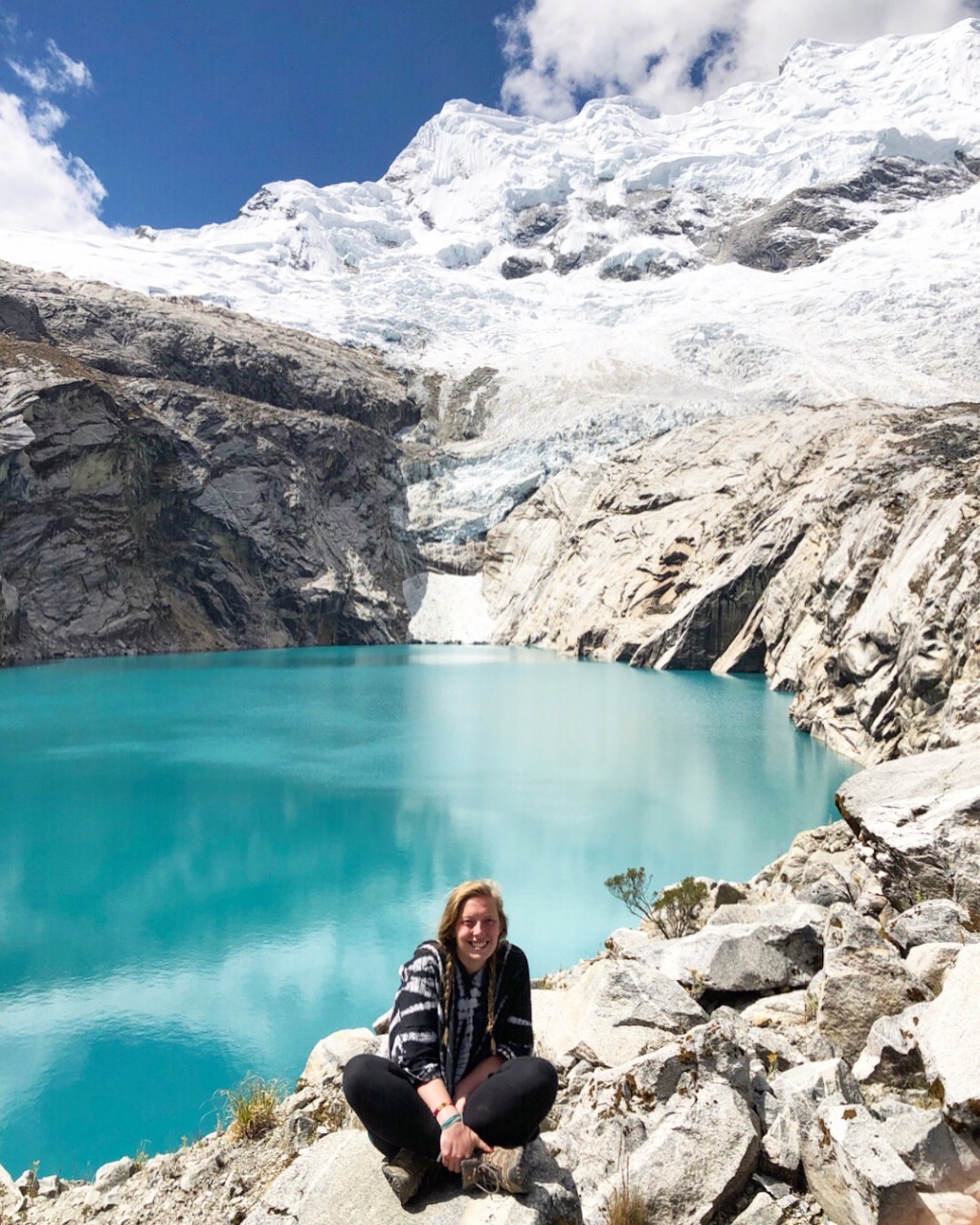
I am serving in the mountains of Peru in a region called Ancash. It is known as the “sierra” or mountain region of the country. Peru is very diverse- it also has coastal and jungle sites! Some of my friends are living in communities by the beach, and others in the green jungle. I have been in Peru for about 19 months now! I have 8 months left of my service.
4. Did you get to choose your country of service?
I actually preferenced Peru as my first choice out of 3 (I believe the others were Guatemala and Fiji). I wanted Peru because the Peace Corps post there had a Youth Development position open at the time, which was the sector I wanted to work in. I also had experience studying Spanish in university and wanted to continue using and bettering my Spanish speaking abilities. I was very happy to have been offered the position in Peru because it was my first choice!
5. What’s your housing situation like?
I have lived with a host family for the entire 19 months of my service! I think there are definite pro’s and con’s to deciding to stay and live and eat with a host family, but overall I am happy I did. I have lived in 3 houses, all in the same country but all different! The common theme is that I have my own room, and a family with whom I eat all of my meals with (besides when I go on vacation or have a craving). I live about a 10 minute walk to my school, and my nearest bodega is across the street! Two of the houses have had wifi and a shower (sorta..), the other was more rural and filled with animals (sheep, pigs, etc.) which we actually ate for our meals! I’ve had a kitchen with wood burning fire and another with an electrical oven. There really is no way to tell what kind of house you’ll be placed in. I love my host family now, and am lucky to have people who care about me and my safety. And they make amazing food too!
6. What’s the climate like where you live?
Where I live we have 2 seasons – rainy, and dry. During the rainy seasons, the mornings are sunny and warm, but the afternoons come with downpours. During dry season, the crops suffer and the hills are not as green, but it is very sunny and great weather for hiking and climbing. When it’s dry, it can get pretty cold at night. I use my hot water bottle to keep me warm!
7. What’s your daily routine like there?
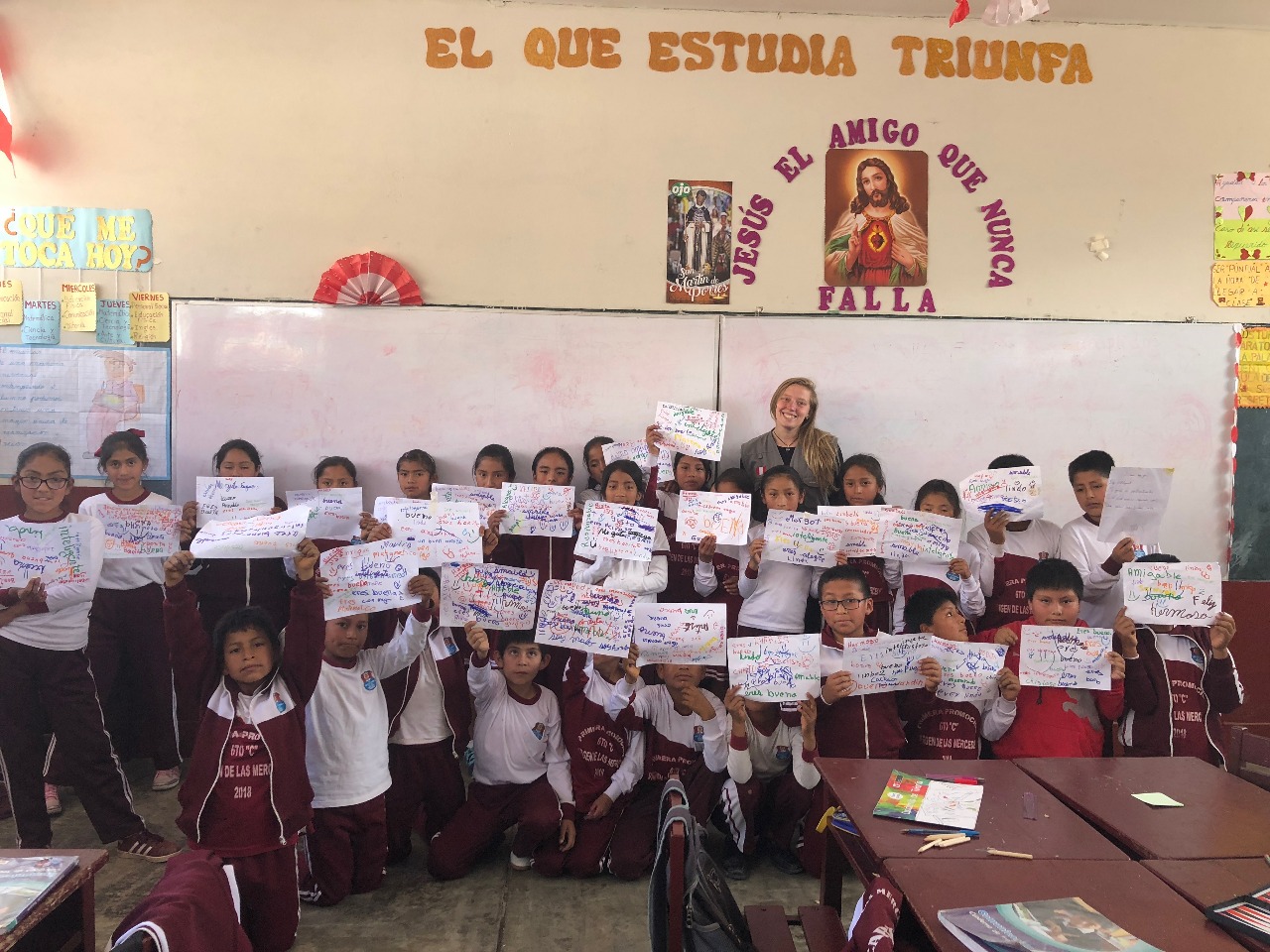
As a Youth Development volunteer, I work a lot with the school, the municipality, and the department of education. I usually wake up, eat breakfast, and head to the school to co-teach 5th and 6th graders in life skills classes at the elementary school. I also teach high schoolers every other week in themes of sex education and employability. I have an established calender of my class schedules, which I organized with the teachers, to make my life easier. When I’m not in the classroom, I stop by the municipality building to see if anybody needs any help, and at the department of education to continually plan sessions and projects for the community. I go home for lunch, and sometimes take a nap afterwards 🙂 In the afternoon, I work out, lesson plan and prep for the next day, and usually watch a lot of netflix or read. During rainy season I stay inside a lot more!
8. What kind of food do you eat on a normal day? Any favorite foods specific to your country of service or your site?
Peruvians LOVE potatoes and rice. So pretty much every day those two ingredients are incorporated into my meals. In the morning, however, I drink coffee and eat a piece of bread with either cheese, avocado, or margarine. My family usually has mandarins and bananas (and mangos if they’re in season) for snacks in the kitchen. At lunch & dinner we always start with a soup, and then eat a “segundo” or second dish. That’s where the rice and potatoes come in, sometimes with added beans, chicken, or other protein. I try to encourage my family to incorporate more veggies and salads in the meals! Sometimes they listen… The most shocking food we eat is probably guinea pig. My family raises guinea pigs in our house and every so often will fry a few to eat for lunch and dinner. They love it! Me, not so much…
9. How is your connectivity in site? Are you able to communicate with others from back home?
I have great connectivity. I have a peruvian phone plan which gives me access to Whatsapp calling, texting, and extra apps such as facebook, instagram, and safari. I have no problem reaching my friends and family – I feel very lucky!
10. What language(s) is spoken in your site? Do you have any favorite words or phrases you’ve picked up along the way?
The majority of people speak “Castellano” (Spanish), and that it what I use 99% of the time. There is a native language, however, that many families continue to speak as their first language, and a lot of others as their secondary language, called “Quechua.” Quechua is crazy hard to understand, but a lot of my friends actually live in towns where they had to learn it to get by! We participate in workshops taught by Peace Corps (in addition to Spanish) if we live in regions where it is spoken. For example, “Imataqshutiyki?” means “What is your name?” I am extremely impressed by all of the volunteers who have learned Quechua.
11. Are you near other volunteers?
Yes! I am lucky to have a site mate who is a main support and great friend to me. He is a community economic development volunteer, so we work in different institutions, but we meet up to hang out and go hiking a lot. Volunteers are usually about 30/45 minutes away from each other otherwise near where I live.
12. What kind of work are you doing in your site? Any big projects that you’re currently working on in your community, or that you hope to work on in the future?
I am working to develop youth leaders and projects led by youth (ages 10-24) in the community. I prefer working with younger students, so I have been training 5th and 6th grade students (10-13 yrs old) in leadership, positive self identity, and project development. Some examples of projects the students have developed include a theater production on “Bullying” to teach the younger students about the different types of bullying and ways to identify and prevent it from happening. Another group worked on a community clean-up project, and learned about the importance of reducing, reusing and recycling. In my last year, the students will continue taking on these leadership roles and teaching the community and the younger students how to care for others as well as the environment.
13. What helped you decide to become a volunteer?
I wasn’t completely set on what career path I wanted to follow after graduation, but I knew I wanted to work in either non-profit or education. I realized that Peace Corps would be the perfect time to not only figure out what my passion was, but also learn and grow throughout the 2.3 years. I wanted to better my Spanish, and expose myself to new cultures and ways of life before jumping into a career. Also, the RPCV benefits excited me, including the ability to apply for grants and scholarships for graduate schools after service.
14. What are your favorite parts about being a Peace Corps Volunteer
Not only have I loved meeting new people in my community, learning new ways to live and eat and pass time, but I have met some of the most amazing people within the PCV community. I have discovered more about myself, about my privilege, and my values than I ever thought I would. I definitely loved having the free time to explore my passions and hobbies on top of working in the community. Being able to explore the country on the weekends and on vacations is an incredible benefit as well. My FAVORITE part, though, have been the kids in my classes. I have so much love for them, and am astounded by their strength and energy and curiosity. Now I know for sure that I want to be an elementary school teacher when I go back to New York, and I have Peace Corps to thank for that realization.
15. Any advice for people who may be interested in becoming a volunteer in the future?
Don’t have any expectations!! Come in to the experience with a completely open mind, ready to change and grow and learn. Every single person’s situation will be different, even if you’re in the same country, down the street, next door. Know that in the end, every hardship will make you stronger, and will be worth the struggles. We have incredible medical and social support here, so you’re never really alone. And if it ends up not being for you, that’s fine! At least you tried, and you pushed yourself which is an accomplishment in itself. I say if you’re considering it, and you are able to make time in your life for the experience, GO FOR IT!! 🙂
 820 Days of Pura Vida
Yeah Lesia!
LikeLike