Day 37. Today I woke up at 7:00am to a chorus of shrieking dogs. I rolled out of bed. The Daily podcast buzzed in the background as I threw some eggs and bread in a pan (yes, the bread too – no toaster). Upon opening the tap it was revealed that the water had been shut off, again. I piled my dirty dishes in the sink and convinced myself to lace up my sneakers and walk along the airplane landing strip near my house. I exchanged “buen dia”’s with the women I often cross paths with power walking in white zip-up hoodies and pink Under Armor visors. I pet a dog. I returned home. At 10:00 am I crawled back into bed to read. I woke up again at 12:00 pm with a plate of half eaten pancakes on my chest and a copy of We Wish to Inform You That Tomorrow We Will be Killed With Our Families open next to me, exactly three pages closer to completion in comparison with when I opened it a couple of hours before.
For the past month+, unions across the country of Costa Rica have been en huelga (on strike). This includes the APSE (Asociación de Profesores de Segunda Enseñanza), ANDE (Asociación Nacional de Educadores), SEC (Sindicato de Trabajadoras y Trabajadores de la Educación Costarricense), among a number of other public and private unions throughout the country.

What’s it about? A Quick and Dirty Synopsis
This is one of the largest strikes that Costa Rica has faced in over two decades. Strikes are currently going on in protest of a tax reform law that is under debate in the Legislative Assembly that the country’s newly elected president, Carlos Alvarado (PAC – Partido Acción Ciudadana), is trying to push through. The combo fiscal is considered “prejudiced against the middle and lower classes” (BBC News Mundo, “Costa Rica: que es el “combo fiscal”). The current administration disagrees with this sentiment, asserting and emphasizing the importance of passing this financial plan in order to lower the rate at which the national debt and fiscal deficit are rising. Despite efforts to compromise and create a different proposal that appeals to both parties, neither the government nor los sindicatos appear willing to budge.
Where exactly is this going down?
Everywhere. In cities and towns large and small across the country of Costa Rica. Larger-scale national marches have been organized in the capital, San Jose, and smaller manifestations have been organized each day of the week (yes, even Sundays in some cases) for the last month at regional and district levels. Tortuguismo (driving somewhere in a line of cars at a pace akin to that of one’s internet connection speed circa 2004) has been organized on major highway routes, and roadblocks on major bridges and highways have paralyzed the country for the past month.
Is it peligroso?
No, and it is not anticipated that any of the protests will become dangerous. Though some arrests have been made, there have not been examples of any serious acts of violence occurring at any of the manifestations.
So, how long is this supposed to go on?
Quien sabe. No one knows. It’s indefinite. Could end tomorrow, could be our reality for another week, month; people can share their estimates, but no one really knows.
What exactly does that mean for you guys?
It means that a lot of us, particularly those who work in public sectors and education, have not worked in over a month. Students have not attended classes. Classrooms have gone unoccupied. Students in their final year have become increasingly concerned about passing their final exams (a set of tests known as the Bachillerato) in early November. A lot of people have been affected by the strike in a variety of ways, be it by getting stuck in 12+ hours of standstill traffic or struggling to wake up in the morning without a purpose to drive your day. Three weeks into the strike, 90,588 medical appointments were cancelled and approximately 2,299 surgeries were rescheduled (Caja Costarricense de Seguro Social, CCSS). The tourism industry has also felt a blow, as an estimated $250,000 was lost as a result of cancelled tours (BBC News Mundo, “Costa Rica: que es el “combo fiscal”). Even those who are not directly on strike have felt the effects ripple out and disturb their waters in one way or another.
So, what have you been doing during the huelga?
The question that has opened and dominated conversations across the country since the first week of the huelga led us to stopping holding our breath waiting for it to come to an end. Instead of regaling all of you with stories of my own huelga misadventures over the past 37 days, I reached out to fellow PCVs across the country to compile this list of 6 Things to do When You’re on Strike:
- Test Your Limits
“The strike allows volunteers to push their brain, body, and their odor to its limits. I stayed in my house without leaving for 3 days straight and without showering for 2.”
–YD Volunteer, Jackie
- Explore A New Profession
“The extreme boredom led me to throw all my dignity out the window and offer English classes to those who had been begging me for months (even though I’ve never taught English in my life). Response I received: ‘we’re all on vacation, you should be enjoying it too.’ Me: last ounce of dignity gone, continues laying on the cool tile looking at the ceiling.”
-YD Volunteer - Become a Mom
“I’ve spent at least one week of the huelga washing, taking care of, and finding homes for a litter of puppies. They arrived at my door after I started giving the Mom scrap food. While it’s pretty sweet it’s also kind of terrifying because they are all going to grow up to be not so little puppies and very much big dogs!”
-TEFL Volunteer, Maggie “Mother of Dogs” Yandell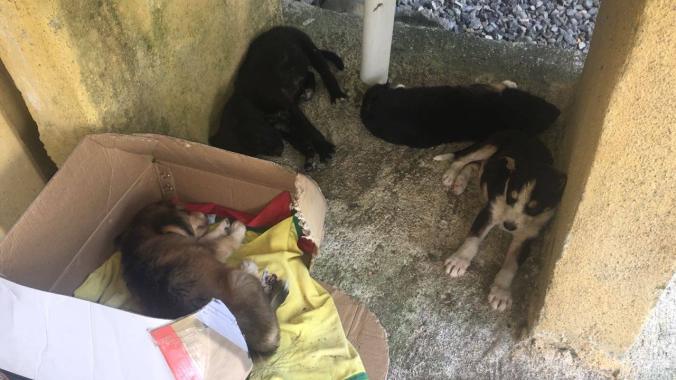
- Or… Become a Grandma
“My pregnant cat pancake left for two days and when she returned I noticed she gave birth. The huelga has given me ample time to go on kitten hunts to try to find them.”
–TEFL Volunteer, Megan


5. Discover You’re a Culinary Genius
“The change in structure has been the most difficult thing about the huelga for me. I go to sleep with with ambitions, to do laundry, cook french toast or something typico for my neigbors, go on a run or extremely long walk/bike ride, go visit the families of my students, play with children and smile and laugh with them. Then each day I wake up to my 7:00 alarm like “eh, better not.” Get out of bed at 9, eat my sad oatmeal, (lately with all the time on my hands, I’ve been experimenting with all that I can put in my oatmeal: butter, my cafecito condiments: powdered milk and packets of sugar, sriracha sauce, lime juice, salsa lizano, salt and pepper, before the huelga, the weirdest thing I had put in there was garlic powder but now the oats are my oyster. I’ll try one new thing in there each day just to see if there is anything that doesn’t taste good on an oats base) and roam around doing nothing until nightfall. I haven’t found anything that doesn’t taste good in oatmeal yet. Like oatmeal is basically just a base like rice, right? So why would anything that wasn’t bad by itself be bad in it?”
– YD Volunteer, Katie


6. Serve Up Some Piping Hot Tea with Counterparts
“Enjoying cafecito with friends and a surprise sit down with my counterpart who fills us in with huelga updates”
-TEFL Volunteer, Christian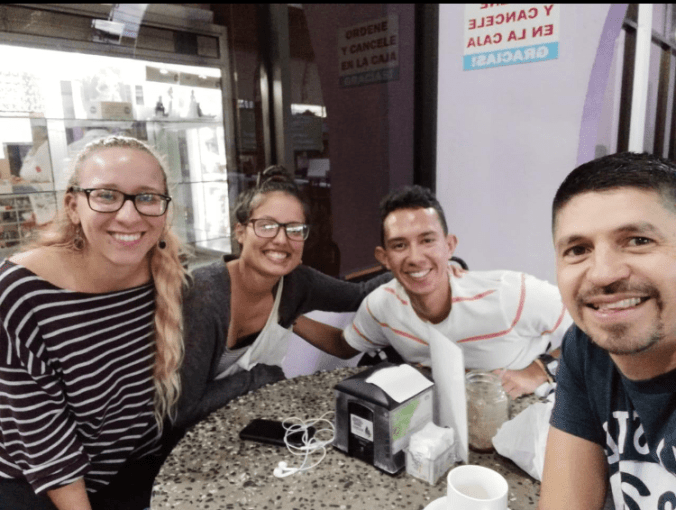
 820 Days of Pura Vida
Pingback: The Mid-Service Edition | 820 Days of Pura Vida
Pingback: JumpStart! January | 820 Days of Pura Vida