One of my favourite past-times is café scouting. True to my generation (#millennials), nothing makes my little heart more content than finding a charming hole-in-the-wall café tucked away in between the hidden nooks of a city. I’m talking exposed brick, Boston ferns cascading down from colourful planters hanging on a ceiling sprinkled with vintage misshapen light bulbs, and an aesthetic low-key and chiva enough to make it “I found it first” worthy among the self-proclaimed hipster community. The kind of lugar that serves as both a perfect place to meet up with all your friends for drunk brunch and also as a hide-out to grind out that ANTH 114 paper you procrastinated on until the day before it was due because you’re awful.
When I think of cafés, in addition to the all-important aesthetic of the place, I find myself dreaming of menus brimming with quinoa and black bean salads, made-that-day blackberry cheesecakes, and, perhaps most importantly:
Matcha.
A beverage of Japanese origin that has existed for thousands of years and found itself in the popular media spotlight after a craze that swept the U.S. cerca ~2015, matcha is my beverage of choice 9/10 times I find myself seated in a café.
I can hear some of you rolling your eyes. I’m just telling it like it is though. If you don’t know what matcha is, por favor go to your nearest local cafe and order one (and if you happen to be in Binghamton NY, I recommend Strange Brew). If you do know what that is, hopefully we can find some solidarity in agreeing that, hot or cold, matcha is the bees knees.
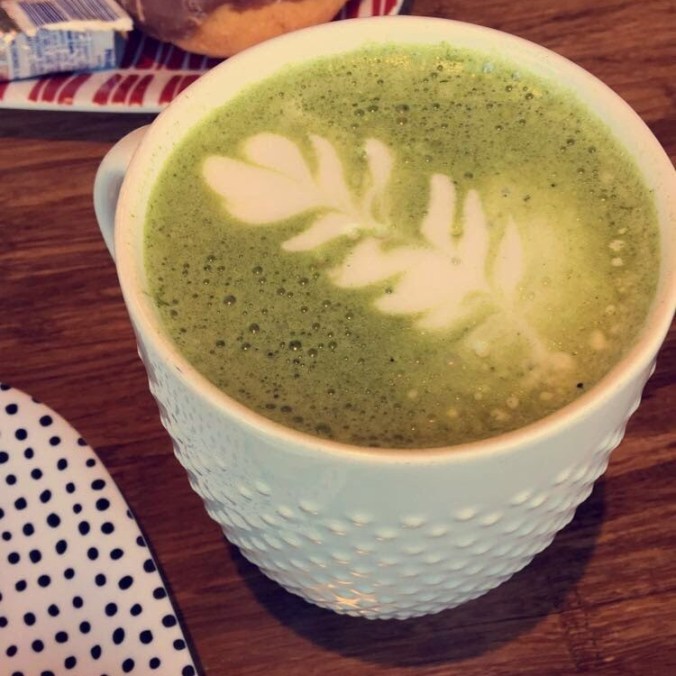
I know. Here’s another.
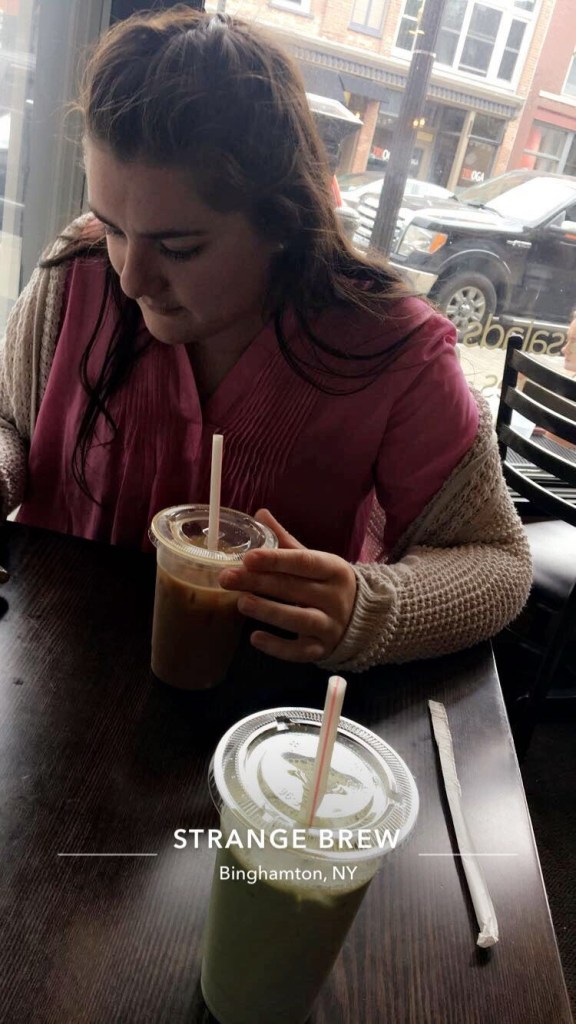
And here’s more Amber for those interested.
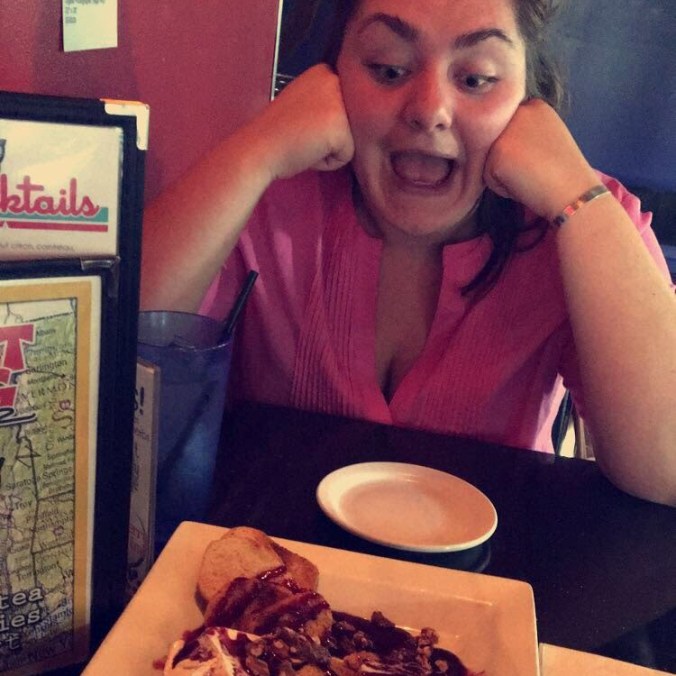
In Costa Rica, both cafe and matcha exist. However, if you ask for them, you’ll be asking for something different than if you were sitting in a Starbucks in the U.S.
Upon my arrival in Costa Rica, I was taken aback by the amount of times I heard people yelling “matcha!” en todos lados (everywhere) whenever I walked by. As a matcha enthusiast, this piqued my curiosity, yet I was never able to find a place that sold matcha green tea.
After being answered with blank stares and slight frowns after asking cafe workers if they sold matcha, I came to learn that matcha is actually a word in Costa Rica used to refer to a blonde or lighter-haired person.
Huh.

matcha.
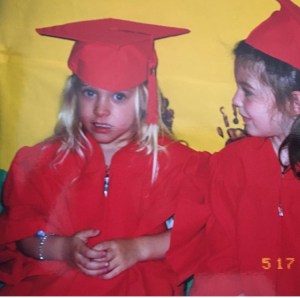
Also matcha. And still just as apprehensive about the world and future as I was in this photo from 2000.
#languagefail
Although to date my search for matcha green tea has turned up zilch, one beverage that this country is never hurting for is good old cafe.
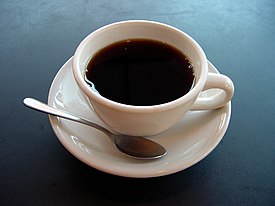
Coffee is one of the biggest agricultural products harvested in the Coto Brus area. Due to its location in the Cordillera de Talamanca, the altitude of the district creates favorable growing conditions for the crop.
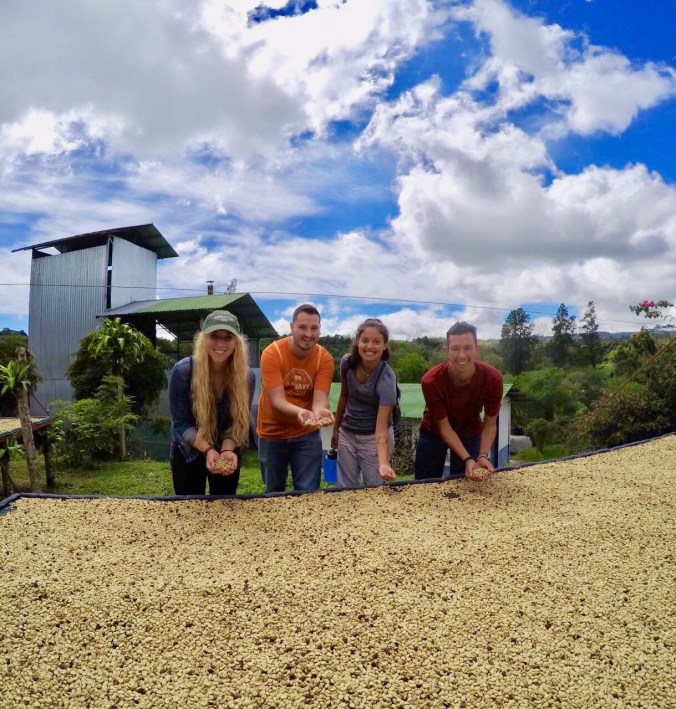
In early December, thanks to a hookup via fellow PCV Christian, I and some other volunteers had the opportunity to tour a coffee plant. Here are five of the fast facts and major takeaways from the experience:

#stolenfromtheinternet to showcase some ‘lil coffee beans. When the beans are red, that means they’re ripe for the pickin’.
- Only about 40% of Costa Rica’s coffee pickers are nationals (ticos), meaning that the bulk of workers come from other countries, namely Nicaragua and Panama. During coffee picking season, the populations of some towns in the Coto Brus area increase to up to three times their normal size during coffee-picking season.


2. Tasting coffee (“professionally”) is an interesting process. As a native of the Finger Lakes Region in upstate NY, I am no stranger to wine and brew tours (#blessed), but this was my first coffee tour experience to mark down in the books. I went in presuming it would be similar, but it was a touch different than I was anticipating. Give it a look:
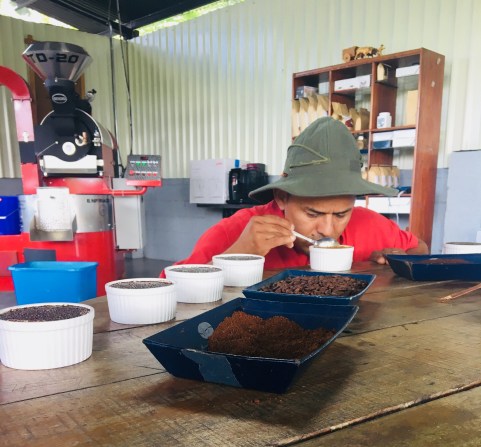
Henry sniffin’ coffee
First, the stirring and the smelling of the coffee.
Featuring: fellow PCVs Christian and Jackie.
Next, the spooning-out-and-quickly-sucking-in-swishing-around-and-spitting-right back-out of the coffee.
Featuring: Henry Barrantes, the stellar coffee connoisseur that made this whole experience possible.
I never really got the technique down for the latter, but had a grand time all the same.
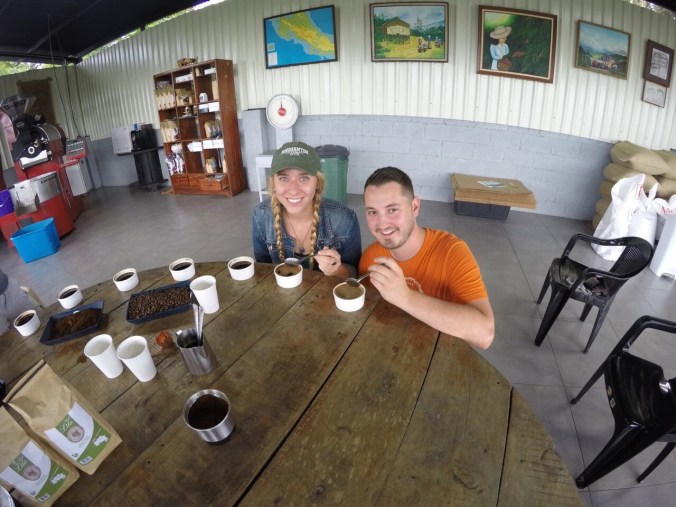
Me having a grand time
3. The darker the coffee does NOT mean the coffee is stronger!
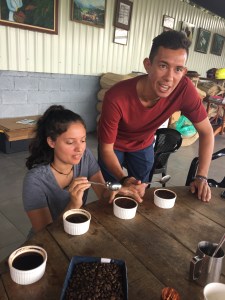
Say whaaaaaat
*GASP*. Actually, and much to my surprise, the exact opposite is true. It is in fact the lighter looking coffee that is “stronger”, or more acidic, and considered to be of a higher quality. Additionally, as (good) coffee cools, it shouldn’t lose its flavor. I, personally, am a classic case of leaves-coffee-out-to-cool-but-accidentally-forgets-about-it-and-never-actually-drinks-it because I would rather drink cold coffee than burn my tongue off on hot coffee and not be able to enjoy food for the next two days. When most store-bought coffee cools, however, it tends to taste a little …gnarly. After making coffee in a coffee maker at home, it usually has a life of half an hour before it becomes feo (ugly, nasty). HOWEVER, as coffee cools, if it is of a higher quality (pure, without additives) it should actually become stronger and improve in flavor. How’s that for a nice couple of fun-facts to make you sound like a coffee-buff while you’re trying to impress your friends over Sunday brunch.

“cajula” of coffee
4. Picking coffee for a living is far from easy. Coffee picking season usually runs its course between September-March, with peak months being December/January. Coffee pickers typically have to madrugar (wake up with the sunrise or earlier, aka super freaking early) to get to work and spend the entire day until dusk picking coffee, in down-pouring rain or scorching shine. Coffee is measured by the cajula, with twenty cajulas making up one fanega. Coffee harvesters are paid by what they pick, making approximately 1,000 colones per cajula. Most coffee harvesters pick 6 cajulas per day, making approximately 6,000 colones, roughly equivalent to $12 USD. Let’s do some quick math:
$12 x 30 days = $360 per month
$360 x 5-6 months = $1,800 – $2,160
For the amount of work done, that’s literally nothing.
All the same, that money is used to pay the rent, put food on the table, and provide basic needs for many families in Costa Rica and bordering countries.
If you’re interested in learning more about how socioeconomic factors tie in with the coffee in Costa Rica, check out this article: 30,000 Families Still Earn Their Livelihood From Picking Coffee in Costa Rica.


5. The kindness of strangers literally never ceases to leave me awestruck. All in all, this was an incredible experience. A few things that were not pictured in this blog include the part where Henry talked to Christian and offered to give us (who, at the time, were a group of total strangers) a coffee tour and tasting for free, Henry driving all of us both to and from the tour, getting hamburgesas at a #dope soda in San Vito afterwards, and all of the awesome little moments in between.
Huge huge HUGE shout-out and thank you to Henry Barrantes and Desafios Tours for such a positive and informative experience. I may still be on the search for matcha green tea, but one thing that I’ve never had to search too far and wide for here is the pura vida mindset that captures the kindness, warmth, and open attitudes of so many people in this beautiful Central American country.
 820 Days of Pura Vida