Hi there! My name’s Lauren. Welcome to my world. Thanks in advance for taking the time to check it out.
I am a TEFL Peace Corps Volunteer serving in a town called San Vito, Costa Rica, located in the province of Puntarenas. Right about here:
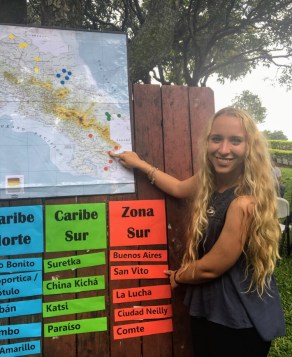
Site Assignment Day
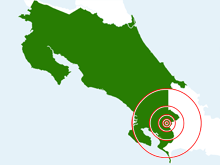
San Vito, Costa Rica
San Vito is a small semi-urban center nestled in between mountains and coffee fields close to the frontera with Panama. It is located on the Pacific side of the Parque Internacional de la Amistad (International Park of Friendship, how fun is that?), which is a mountain chain that runs through Panama and Costa Rica. With a population just shy of 15,000, San Vito is an important center in the Zona Sur, boasting a number of small businesses including supermarkets, banks, bus companies, schools; the list goes on.
Due to its altitude, I’ve found myself enjoying a more fresco climate here in the mountains. It’s something I’m very thankful for, because, also due to its location in the mountains and my lack of a car, I do a lot of walking uphill. Think, leg day everyday.
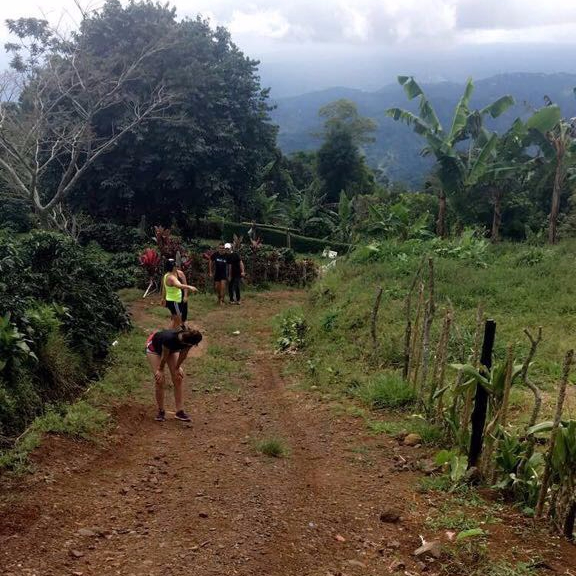
#hillz4dayz
After having spent every day here meeting new people and new places, I’ve learned that nearly every person and town also has an apodo, or “nickname.” San Vito is no exception. While driving here for the first time with my counterpart, he explained to me that my new home also goes by the namesake Cielo Roto, which, translated literally, means “broken sky,” because…
It rains. A lot.
So San Vito isn’t exactly a “common” Costa Rican name. There’s a reason for that.
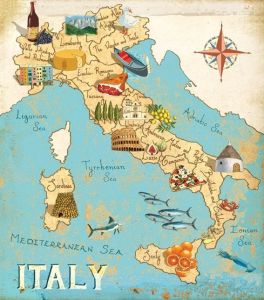
Motherland of pizza, vino, and pasta (“the trifecta”)
San Vito was founded as an agricultural colony by a group of 45 European immigrants, predominately of Italian origin, in the mid-1900’s. After overcoming initial challenges including clearing the land as well as the isolation of the region, the Coto Brus area ultimately expanded from a colony of 45 to over 10,000 inhabitants by 1982. This was due largely in part to success of agricultural crops, namely coffee.
While San Vito is considered “una pequena ciudad Italiana“ in Costa Rica, a lot has changed since the area was settled by immigrants over half a century ago. Hoy en día, fewer people are fluent in Italian, and not many descendants of these original Italian immigrants remain. Similarly to my jeans after sitting out in the unforgiving morning sun, the once prominent Italian influence in San Vito, too, has faded. Luckily for foodies such as myself, the area still maintains traces of its Italian history through cuisine at some of the local restaurants. I’m talking Lilliana’s Pizzeria. #BlessUp.
The cuisine, though an important mode through which Italian influence in the area has been maintained, is not the only way that Italian culture has been preserved in San Vito.
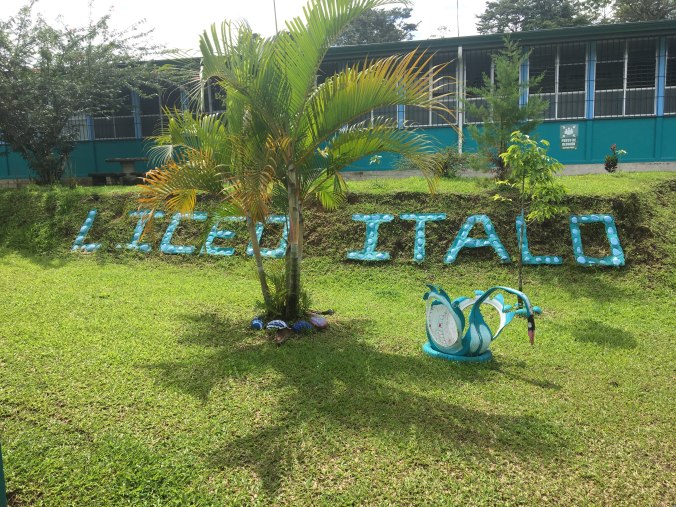
That swan is made out of an old tire … talk about utilizing your resources
There are a number of educational institutions in the San Vito area (luckily, including mine! #ItaloCostarricense) that teach Italian in the area as an obligatory second language in order to develop cultural awareness and understanding, particularly in the Coto Brus area, whose history has such strong ties with Italian culture. Che bello!
So, as we wrap things up here, it goes without saying that this post offers an impossibly quick snapshot overview of the place I have the great fortune to call home for the next two years. Thanks again for taking the time out of your day to check it out, and, as there is a lot that’s left to be explored, I hope you’ll continue to follow my journey here!
 820 Days of Pura Vida